
 11
11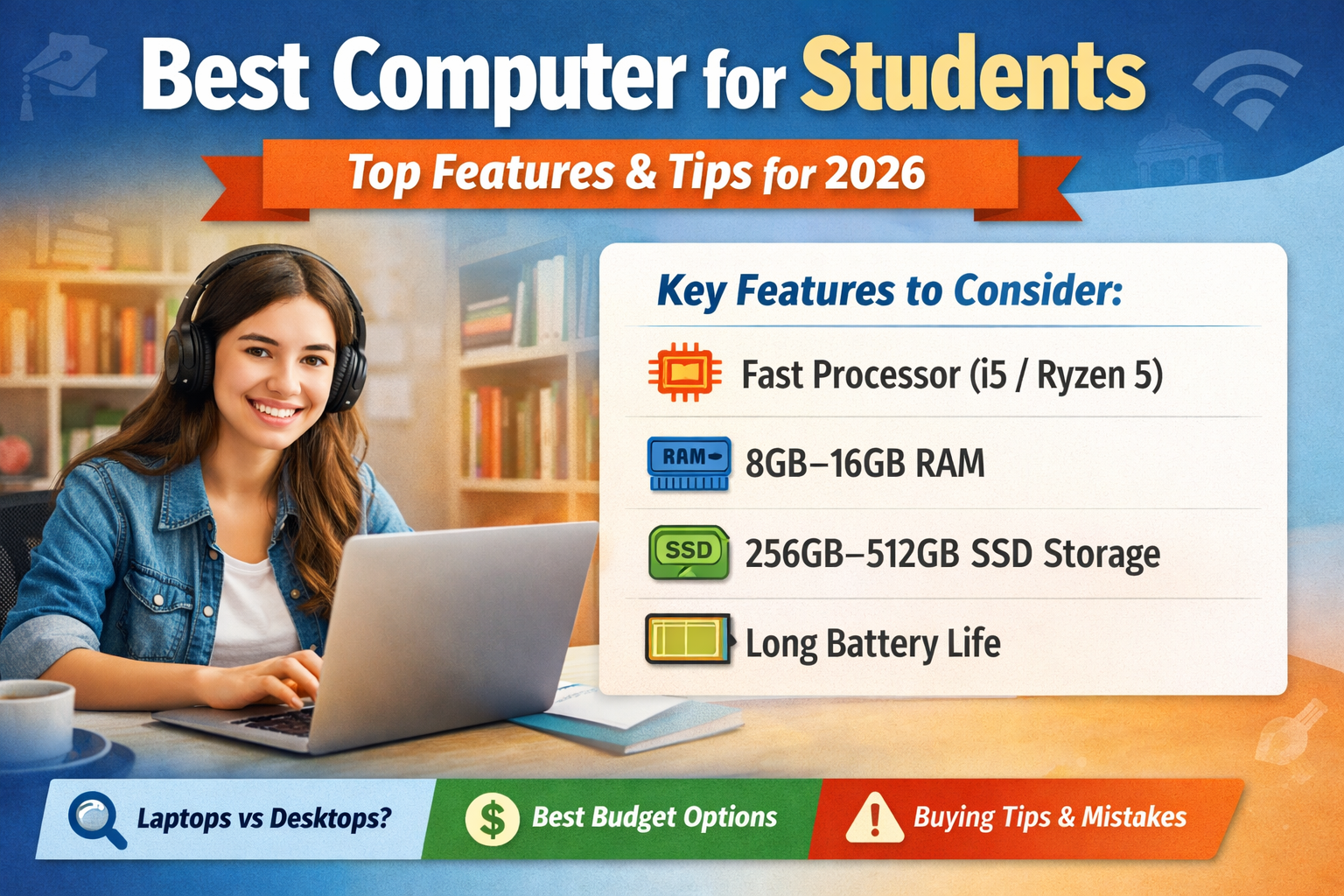
Choosing the best computer for students is an important decision in today’s digital world. Whether you are in school, college, or university, a computer has become an essential learning tool. Students use computers for online classes, assignments, research, presentations, coding, design work, and skill development.
However, with so many options available in the market, selecting the best computer for students can feel overwhelming. This guide will help you understand what to look for, which features matter most, and how to choose a computer that supports your academic success.
A reliable computer improves productivity and makes studying easier. The best computer for students helps with:
A slow or outdated computer can cause frustration and waste valuable time. That is why investing in the best computer for students is important for long-term academic growth.
Before buying, it is important to understand the different types of computers available.
Laptops are portable, lightweight, and easy to carry. Most students prefer laptops because they can study from anywhere—home, classroom, library, or café. For flexibility and convenience, laptops are often considered the best computers for students.
Desktop computers are more powerful and usually offer better performance for heavy tasks like video editing, animation, and gaming. However, they are not portable.
For most students, a laptop is the best computer for students due to mobility and practicality.
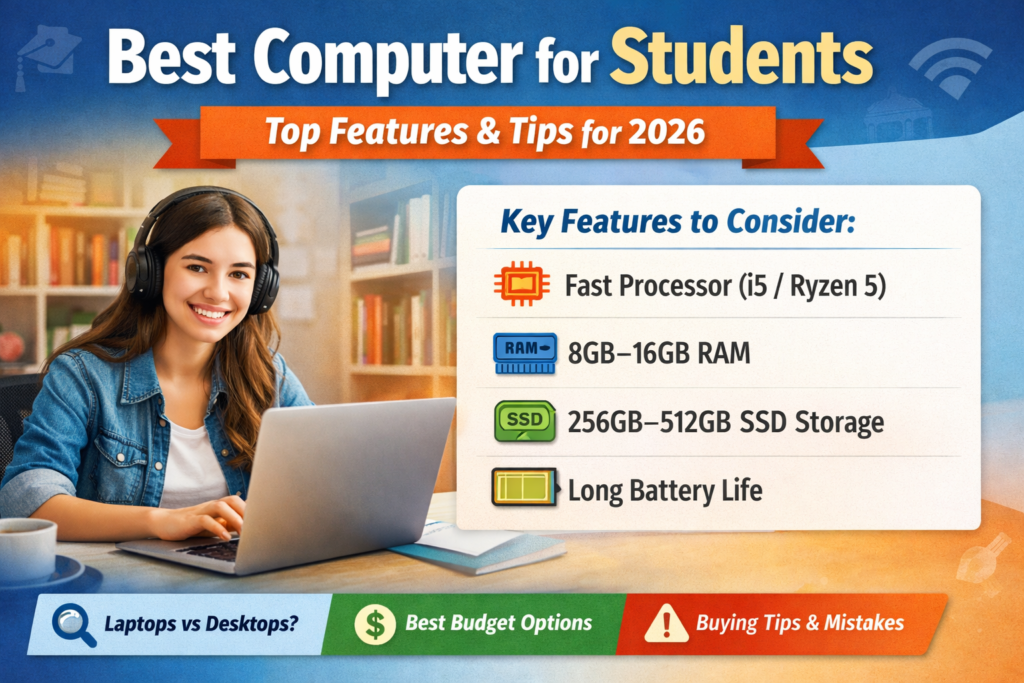
When selecting the best computer for students, pay attention to these key features:
The processor is the brain of the computer.
A good processor ensures smooth multitasking and better performance.
RAM allows your computer to handle multiple applications at once.
For most students, 8GB RAM is sufficient. However, higher RAM improves speed and performance.
Always choose SSD over HDD.
SSD storage makes the best computer for students boot faster and load applications quickly.
For laptops, battery life is crucial. Choose a laptop with at least 6–8 hours of battery backup.
A 14-inch or 15.6-inch Full HD display is ideal. A clear screen reduces eye strain and improves study comfort.

Different courses require different specifications.
For online classes, homework, and basic browsing:
This configuration is enough for basic academic tasks.
For assignments, presentations, and multitasking:
This setup is ideal as the best computer for students in college.
For coding, programming, and software development:
These students require higher performance systems.
For graphic design, video editing, and animation:
For creative work, performance matters more than portability.
Feature Laptop Desktop Portability Highly portable Not portable Performance Good, very powerful. Space Compact Needs desk space Best for most students Heavy editing & gaming
For everyday academic needs, a laptop is usually the best computer for students.
If you are looking for an affordable option, focus on performance rather than brand. The best computer for students on a budget should include:
Budget-friendly computers can easily handle online classes, browsing, and document work.
Many students make common mistakes while purchasing a computer:
❌ Choosing 4GB RAM (not sufficient today)
❌ Ignoring SSD storage
❌ Buying only based on brand popularity
❌ Overpaying for unnecessary features
❌ Ignoring battery life
The best computer for students is the one that matches academic needs and budget.
To keep the best computer for students working efficiently:
✔ Keep your operating system updated.
✔ Install antivirus software
✔ Avoid downloading harmful files.
✔ Regularly clean storage
✔ Use proper ventilation.
Proper care increases performance and lifespan.
Selecting the best computer for students requires careful planning. A good computer supports learning, improves productivity, and helps students build digital skills. Whether you choose a laptop or desktop, focus on processor, RAM, storage, and battery life.
Investing in the best computer for students is not just about buying a device—it is about securing your academic future. Choose wisely, compare features, and select a computer that will serve you well for years.
A computer with at least an Intel i5 or Ryzen 5 processor, 8 GB RAM, and SSD storage is ideal.
Yes, 8GB RAM is sufficient for most academic tasks.
Laptops are more practical and portable for students.
At least 256GB SSD is recommended.
A good computer should last 4 to 6 years with proper maintenance.
Great idea 👍 More FAQs = better SEO + higher Rank Math score
Here are 10 additional FAQs for “Best Computer for Students”:
An Intel Core i5 or AMD Ryzen 5 processor is considered ideal in the best computer for students because it handles multitasking, browsing, and study software smoothly.
Yes, SSD storage makes the computer faster. It improves boot time, file loading speed, and overall performance, which is essential for students.
A 14-inch or 15.6-inch Full HD display is best. It provides enough screen space for studying while still being portable.
Students should look for at least 6–8 hours of battery life so they can attend classes and study without frequent charging.
Not always. Most students only need a mid-range system unless they are doing video editing, gaming, or advanced programming.
Yes, a budget computer with 8GB RAM and SSD storage can easily handle online classes, browsing, and assignments.
A dedicated graphics card is only needed for design, animation, gaming, or engineering software. Regular students do not require it.
At least 256GB SSD is recommended, but 512GB is better for storing projects, software, and study materials.
A good computer should last around 4–6 years with proper care and maintenance.
If budget is limited, a certified refurbished computer can be a good option, but make sure it comes with a warranty.