 11
11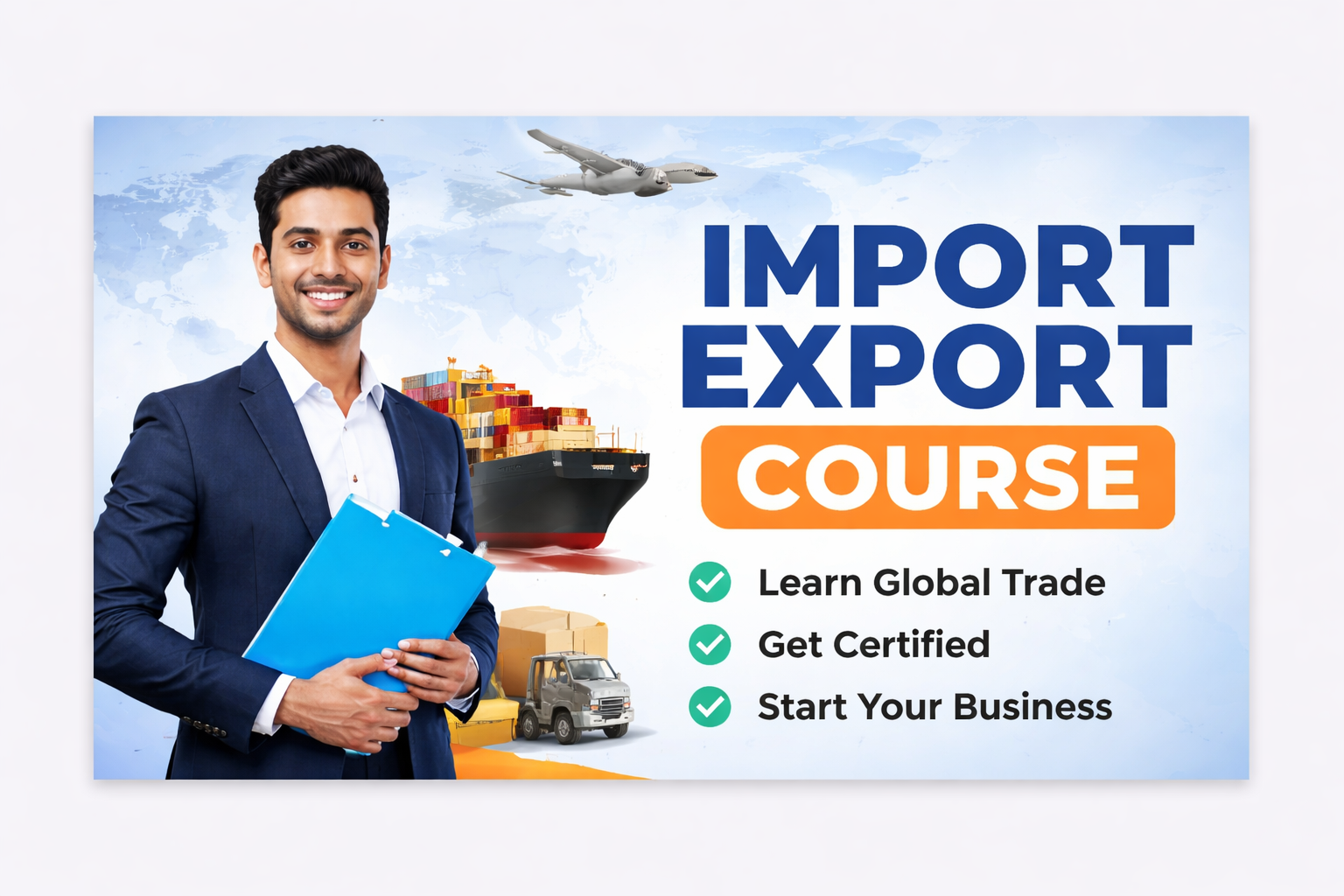
An import/export course is the best option for anyone who wants to enter the world of international trade. With globalization expanding rapidly, import and export businesses are growing faster than ever. This course provides complete knowledge about global trade, documentation, logistics, customs clearance, and international payment systems.
If you are planning to build a career or start your own business in international trade, an import/export course can give you the right direction and practical skills.
An import/export course is a professional training program designed to teach the complete process of importing and exporting goods between countries. This course covers everything from basic trade concepts to advanced export documentation, customs rules, and global market research.
The main goal of an import/export course is to make students confident in handling real-world international trade operations.
The demand for
import/export professionals is increasing every year. In 2026, businesses are focusing more on global expansion, creating huge opportunities for trained professionals.
Reasons to choose an import/export course:
An import/export course prepares you for future-ready global trade skills.
An import/export course is suitable for:
No prior experience is required to join an import/export course.
The eligibility for an import/export course is simple:
This makes the import/export course accessible to everyone.
The duration of an import/export course usually ranges from
Fees depend on the institute, course level, and training mode. Online import/export courses are usually more affordable than offline programs.
An import/export course syllabus is designed to cover practical and theoretical knowledge, including:
This structured learning helps you handle real export-import operations confidently.
Documentation is the backbone of international trade. An import/export course teaches important documents such as:
Proper documentation ensures smooth customs clearance and timely shipments.
An import/export course explains all required registrations, including
These licenses are mandatory to start an import/export business legally.
An import/export course teaches export procedures in a systematic way:
This step-by-step approach simplifies the export process.
Import procedures are equally important and include:
An import/export course helps you understand these steps clearly.
Payment methods are a crucial part of an import/export course. You learn about:
Understanding these methods helps reduce financial risks in global trade.
Logistics plays a major role in international trade. An import/export course covers:
This knowledge ensures safe and timely delivery of goods.
An import/export course for beginners focuses on:
This makes it easy for beginners to understand international trade.
Both learning modes have benefits:
Choose the mode that fits your schedule and learning style.
After completing an import/export course, you can work as:
The course opens doors to global career opportunities.
The salary after an import/export course depends on experience and role:
This makes import/export a profitable career choice.
An import/export course guides you to:
With proper training, starting an import/export business becomes easy.
Key benefits include:
An import/export course builds confidence and professional skills.
An import/export course is the perfect choice for anyone who wants to build a career or business in international trade. With practical knowledge, clear concepts, and global exposure, this course prepares you for long-term success. If you dream of working with international markets, enrolling in an import/export course is a smart investment for your future.
1. What is an Import Export Course?
An Import Export Course is a professional training program that teaches international trade, documentation, customs procedures, and global business practices.
2. Who should join an Import Export Course?
An Import Export Course is ideal for students, entrepreneurs, job seekers, and business owners who want to enter global trade.
3. Is Import Export Course good for beginners?
Yes, an Import Export Course is specially designed for beginners with no prior experience in international trade.
4. What is the duration of an Import Export Course?
The duration of an Import Export Course usually ranges from 1 month to 6 months depending on the level.
5. What will I learn in an Import Export Course?
An Import Export Course covers documentation, export-import procedures, logistics, payment methods, and business setup.
6. Can I start my own business after an Import Export Course?
Yes, after completing an Import Export Course, you can start your own import export business confidently.
7. Is an Import Export Course available online?
Yes, many institutes offer an Import Export Course online with flexible learning options.
8. What documents are taught in an Import Export Course?
An Import Export Course teaches documents like commercial invoice, bill of lading, packing list, and shipping bill.
9. Do I need any qualification for an Import Export Course?
Most Import Export Course programs require only basic education like 10+2.
10. Is Import Export Course useful for job opportunities?
Yes, an Import Export Course opens job opportunities in export houses, logistics companies, and MNCs.
11. What is the scope after an Import Export Course?
The scope after an Import Export Course is very high due to growing international trade.
12. How much can I earn after an Import Export Course?
Earnings after an Import Export Course depend on experience, job role, or business scale.
13. Does Import Export Course cover international payments?
Yes, an Import Export Course covers LC, advance payment, and other international payment methods.
14. Is Import Export Course worth it in 2026?
Yes, an Import Export Course is worth it in 2026 because global trade is expanding rapidly.
15. Why should I choose an Import Export Course?
You should choose an Import Export Course to gain global exposure, business skills, and high growth opportunities.